
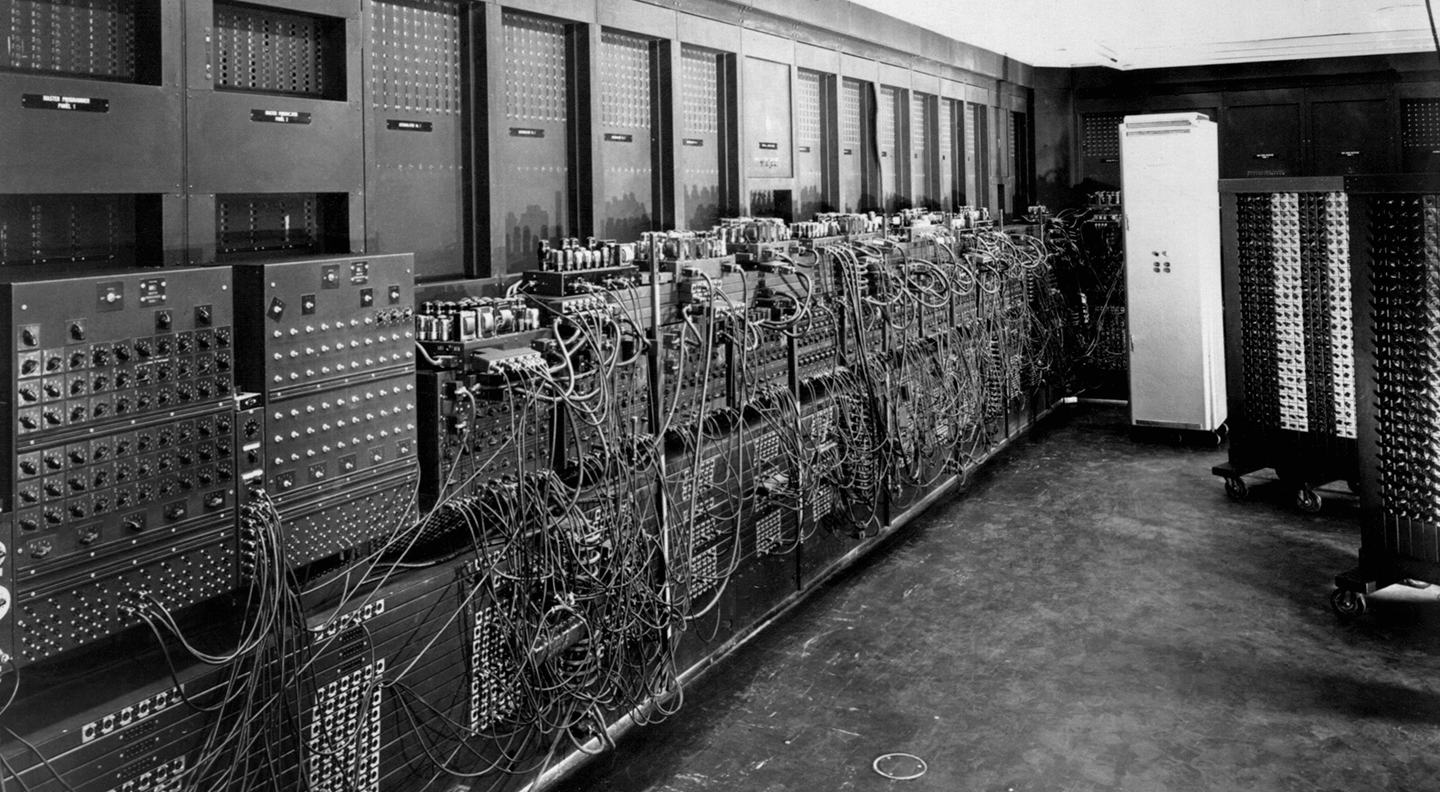
ENIAC, the first digital computer which occupied an entire room
Technology has come an extremely long way in only a short time. In less than one century ago, computers only had a small fraction of the processing power that computers today have, while also being close to the size of a full room. This massive difference in size is largely in part due to the greatly decreased size of transistors available now. Older computers utilized vacuum tubes for their switching elements while modern computers make use of integrated circuits.
One of the most well-known early computers of the modern digital age is called ENIAC. ENIAC stands for electronic numerical integrator and computer. This was the first programmable and electronic general purpose digital computer. The main purpose for this machine was to complete complex calculations for the United States Army on the fly for taking out enemy aircraft. Before this, soldiers utilized analog machines which were not nearly as accurate as ENIAC and used substantially more ammunition. Other applications of ENIAC included weather prediction, thermal ignition, wind-tunnel design, and several other complex, scientific uses.
ENIAC truly set the stage for the future of computing as we know today. Its use of vacuum tubes led to the switch to transistors which is what allowed computing to experience such rapid growth. These gave way to the microprocessor which then allowed for the possibility of an average individual to own a computer, rather than only companies and the government. This was all by the 1970s, only two and a half decades later from the dawn of ENIAC. Computing networks proceeded to form, the personal computer released in the 80’s and the world-wide-web was brought to consumers in the mid 90s. Wireless computing took off, resulting in much smaller handheld devices that could perform the same operations as a personal computer could only years earlier. Fast forward to today, we now have cars that drive themselves, glasses that can tell us the weather, and the hope that small chips implanted into our brains can help restore bodily motor functions. All thanks to ENIAC.
Credits: Title, ChatGPT Version 3.5, prompt: “I need help with a title for my class’s web blog about something we did last class. We talked about a few things like old analog computers as well as the first digital one, ENIAC. We also talked about neuralink and what it means for helping people overcome life changing injuries and disabilities.” Result: “From Analog to Neuralink: Bridging the Technological Evolution Gap in Our Last Class.” The ending was slightly adjusted, but I thought it was a good title to use.